Moffett Field Museum is located at the former Naval Air Station Moffett Field near Mountain View, California. It was once home to the USS Macon, a giant airship that patrolled the Pacific coast in the 1930s. The museum showcases the history of naval aviation from the Macon era to the Cold War and beyond.
| Title | Address | Description |
|---|---|---|
Moffett Field Museum | Building 3, 500 Severyns Ave, Mountain View, CA 94043, USA |
The Macon: A Flying Aircraft Carrier
The iconic Hangar One, known for its massive size and historical significance, makes it easy to spot the museum. It was built in 1933 to house the USS Macon, a 785-foot-long rigid airship that carried up to five Sparrowhawk biplanes inside its hull. The Macon was one of the two “flying aircraft carriers” that the US Navy experimented with in the interwar period, the other being the USS Akron. The Macon and its aircraft were used for reconnaissance and surveillance missions along the West Coast, as well as for testing new technologies and tactics for airship operations.

USS Macon (ZRS-5) era diorama
The Macon’s Tragic End
Unfortunately, the Macon’s career was short-lived. On February 12, 1935, the airship encountered a storm off the coast of Point Sur, California, and suffered structural damage that caused it to lose altitude. The Macon crashed into the Pacific Ocean, killing two of its 83 crew members. The wreck site was designated a National Historic Landmark in 2010, and some of the Macon’s artifacts are on display at the museum.

Moffett Field Museum
Hangar One: A Historic Landmark
The museum originally opened in Macon’s Hangar One in 1994, but had to move out in 2003 due to the discovery of hazardous materials like asbestos and lead throughout the hangar’s structure. The hangar was stripped of its siding and left as a bare skeleton, awaiting restoration. The museum reopened in 2005 across the street from the hangar in Building 126, which served as a recreation building for the Naval Air Station.

Naval Air Station Moffett Field Hangar One
A Tour Through Time
The museum exhibits take visitors on a tour through time from Moffett Field’s earliest days, through the Macon era, the World War II period of Army Air Corps training, until the Cold War when the field was home to P-3 Orion maritime patrol squadrons. Exhibits include photos, models, documents, uniforms, and memorabilia that illustrate the history and the culture of naval aviation at Moffett Field.

Vultee BT-13A Valiant
A Tribute to William Moffett
A special exhibit is dedicated to Rear Admiral William Moffett, who lost his life in the crash of the Macon’s sister ship, the USS Akron, in 1933. Moffett was a pioneer of naval aviation and a strong advocate for the development of airships and aircraft carriers. He was also instrumental in establishing Moffett Field as a naval air station and a center of innovation.

Moffett Field Museum
Cockpits and Uniforms
The museum also displays Lockheed P-3 Orion, Hawker Siddeley AV-8A Harrier and Vought F-8U-1 Crusader cockpits. Harrier cockpit is open for visitors to sit inside and explore. The Harrier was a jet fighter that could take off and land vertically, making it suitable for operations from small ships or improvised airstrips. The museum also has an extensive collection of uniforms from different ranks and periods, as well as a large HO scale model railroad built by Navy air personnel.

Vought F8U-1 Crusader cockpit
Navy Patrol Aircraft
The museum aircraft are displayed outside and include Navy patrol planes from the Cold War era: a Lockheed P-2V Neptune and Lockheed P-3A Orion. The Neptune was a twin-engine piston aircraft that was used for anti-submarine warfare, maritime patrol, and electronic warfare missions from the late 1940s to the early 1970s. The Orion was the successor of the Neptune and had a longer range, higher speed, and more advanced sensors and weapons. The Orion was also used for scientific research and humanitarian relief missions by NASA and other agencies.

Lockheed P-3A Orion
NASA Research Planes
Other planes include a Lockheed TF-104G Starfighter and a Lockheed U-2C, which was obtained by NASA in 1971 and redesignated as NASA #708. The Starfighter was a supersonic jet fighter that was used for high-altitude reconnaissance and research flights by NASA. The U-2 was a spy plane that could fly at altitudes above 70,000 feet and take high-resolution photos of the ground. NASA used the U-2 for atmospheric and environmental studies, as well as for testing new technologies and sensors.

Lockheed TF-104G Starfighter | NASA #825
Other Aircraft
Other aircraft at the museum include a McDonnell Douglas F/A-18A Hornet used previously by the Blue Angels as ship #3, a Vultee BT-13 Valiant, a World War II-era trainer aircraft, and a Bell AH-1S Cobra attack helicopter. The Hornet was a multirole fighter that could perform both air-to-air and air-to-ground missions. The Hornet was also the aircraft of choice for the Navy’s flight demonstration team, the Blue Angels, from 1986 to 2020. The Valiant was a basic trainer that was used to teach pilots the fundamentals of flying, such as takeoff, landing, and aerial maneuvers. The Cobra was a gunship that was used for close air support, escort, and reconnaissance missions in Vietnam and other conflicts.

McDonnell Douglas F/A-18A Hornet
A Peek Over the Fence
While peeking over the fence towards the NASA Ames Research Center, the visitors can also spot some of NASA’s scientific or experimental aircraft, but we will talk more about them on a separate occasion.

De Havilland Canada C-8A Buffalo (NASA QSRA – Quiet Short-haul Research Aircraft)
No products found.
More Photos
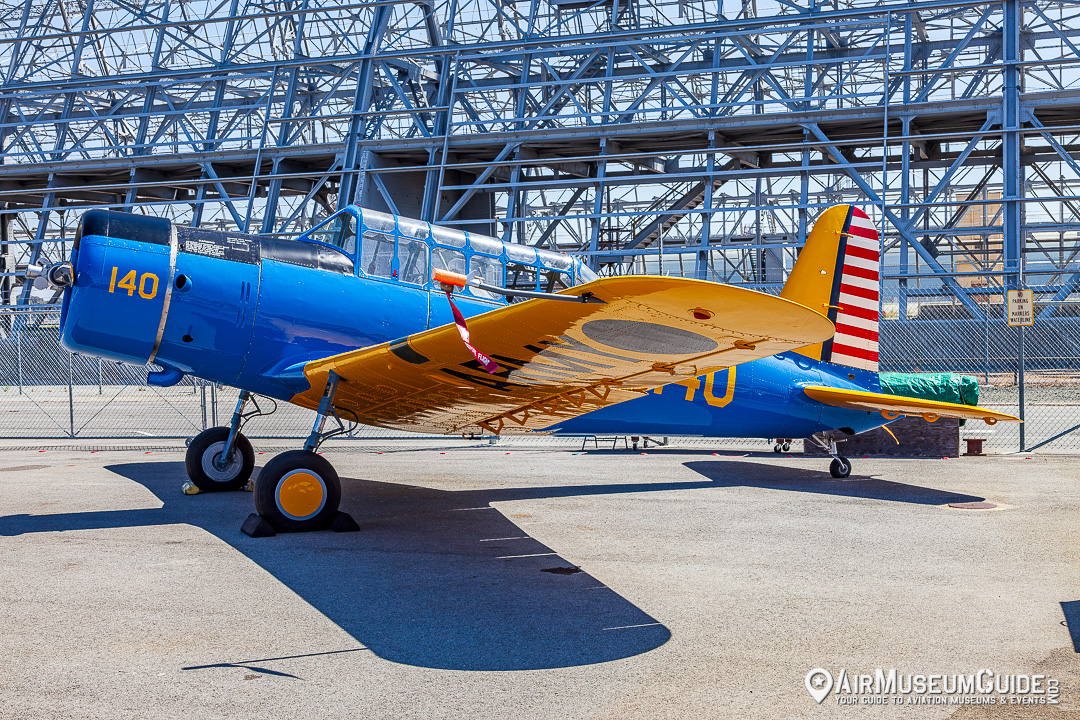
Vultee BT-13A Valiant
Vultee BT-13A Valiant

Lockheed U-2C Dragon Lady | NASA #708
Lockheed U-2C Dragon Lady | NASA #708

Lockheed U-2C Dragon Lady | NASA #708
Lockheed U-2C Dragon Lady | NASA #708

Lockheed U-2C Dragon Lady | NASA #708
Lockheed U-2C Dragon Lady | NASA #708
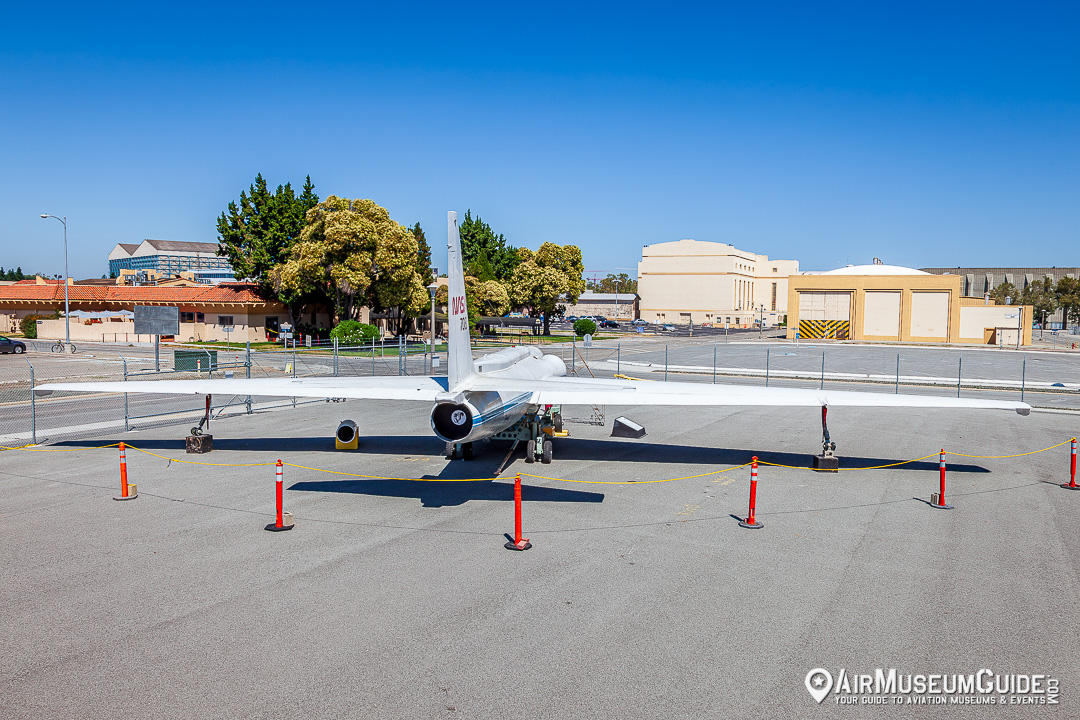
Lockheed U-2C Dragon Lady | NASA #708
Lockheed U-2C Dragon Lady | NASA #708

Lockheed U-2C Dragon Lady | NASA #708
Lockheed U-2C Dragon Lady | NASA #708

Moffett Field Museum
Moffett Field Museum

Lockheed TF-104G Starfighter | NASA #825
Lockheed TF-104G Starfighter | NASA #825

Lockheed TF-104G Starfighter | NASA #825
Lockheed TF-104G Starfighter | NASA #825

Lockheed TF-104G Starfighter | NASA #825
Lockheed TF-104G Starfighter | NASA #825

McDonnell Douglas F/A-18A Hornet
McDonnell Douglas F/A-18A Hornet and Lockheed TF-104G Starfighter

McDonnell Douglas F/A-18A Hornet
McDonnell Douglas F/A-18A Hornet

Lockheed TF-104G Starfighter | NASA #825
Lockheed TF-104G Starfighter | NASA #825

McDonnell Douglas F/A-18A Hornet
McDonnell Douglas F/A-18A Hornet

Bell AH-1S Cobra
Bell AH-1S Cobra

Moffett Field Museum
Moffett Field Museum

Moffett Field Museum
Moffett Field Museum

Hawker Siddeley AV-8A Harrier cockpit
Hawker Siddeley AV-8A Harrier cockpit

Moffett Field Museum
Moffett Field Museum

1943 Link Trainer with instructor’s desk
1943 Link Trainer with instructor’s desk

Moffett Field Museum
Moffett Field Museum

Moffett Field Museum
Moffett Field Museum

Moffett Field Museum
Moffett Field Museum

Lockheed P-3A Orion
Lockheed P-3A Orion

Lockheed P-3A Orion
Lockheed P-3A Orion

Lockheed P-3A Orion
Lockheed P-3A Orion
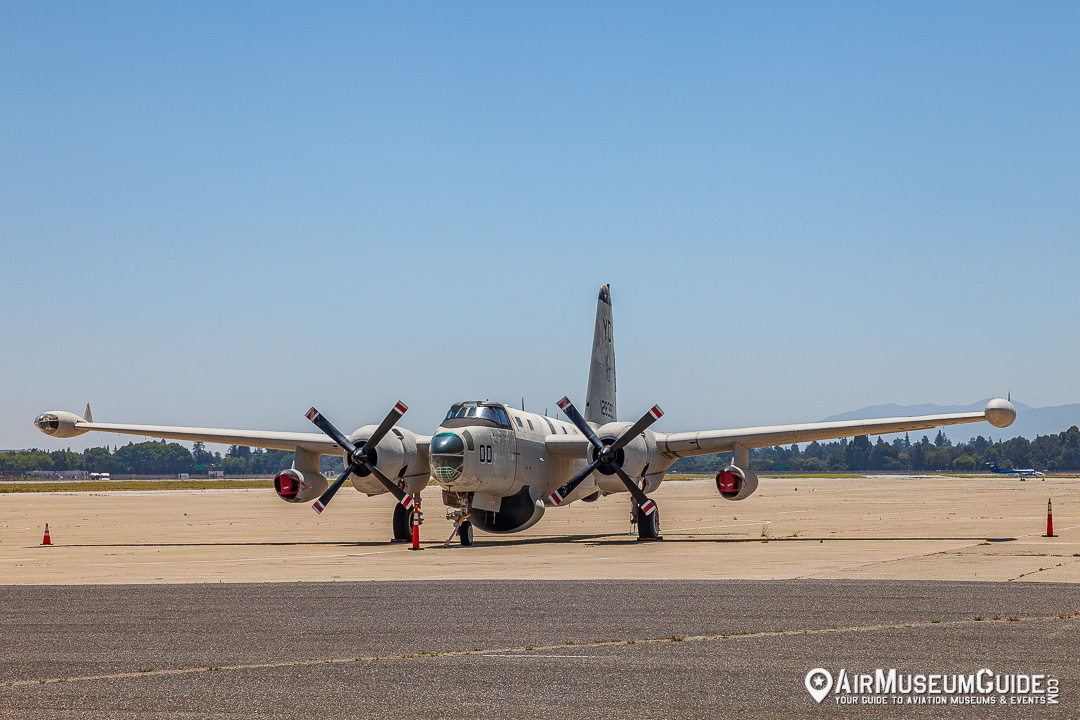
Lockheed P-2E Neptune
Lockheed P-2E Neptune

Lockheed P-2E Neptune
Lockheed P-2E Neptune

Naval Air Station Moffett Field Hangar One
Naval Air Station Moffett Field Hangar One

Lockheed P-3A Orion cockpit
Lockheed P-3A Orion cockpit